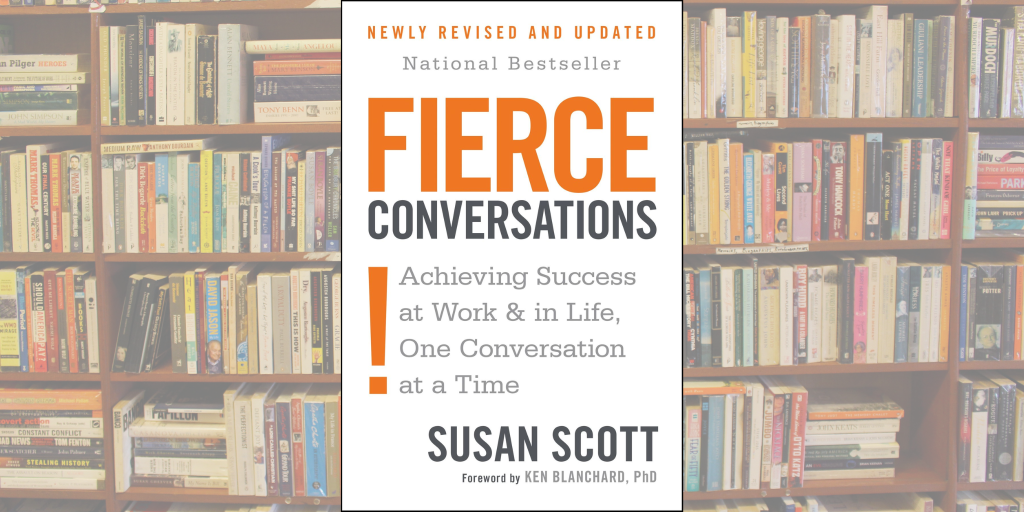
Lionhearted Leadership Through Courageous Conversation
At Lionhearted Leader, we believe every culture is shaped by the conversations people are willing, and unwilling, to have. In Fierce Conversations, Susan Scott argues that leadership is not defined by charisma or authority, but by the quality of the conversations leaders create. Difficult conversations are not interruptions to leadership; they are leadership.
Scott challenges a common misconception that harmony requires avoiding conflict. Instead, she demonstrates that avoiding honest dialogue often creates the very dysfunction leaders hope to prevent. Healthy organizations are built not on agreement, but on the courage to engage truthfully, respectfully, and consistently.
The Conversation Is the Relationship
One of Scott’s most enduring ideas is that relationships are built one conversation at a time.
Every interaction either strengthens trust or weakens it. Every avoided discussion creates assumptions that eventually erode collaboration. Leaders often believe they are protecting relationships by staying silent, when in reality, silence allows resentment, confusion, and misalignment to grow.
For Lionhearted Leaders, this serves as an important reminder: communication is not simply the transfer of information—it is the foundation of organizational culture.
Staying Present to What Matters Most
Scott encourages leaders to enter conversations with full presence rather than rehearsed conclusions. Instead of focusing on what to say next, she emphasizes listening deeply enough to understand what is actually happening beneath the surface.
She invites leaders to ask questions such as:
- What conversation am I avoiding?
- What truth needs to be spoken?
- What assumptions am I making?
- What outcome truly serves everyone involved?
These questions shift conversations away from defensiveness and toward discovery.
Conflict Is Not the Enemy
A central theme throughout the book is that conflict itself is not destructive. What damages teams is unresolved conflict.
Scott argues that healthy disagreement:
- Surfaces important information
- Strengthens decision-making
- Builds mutual respect
- Prevents small problems from becoming organizational crises
Leaders who avoid difficult conversations often create environments where issues remain hidden until they become impossible to ignore.
Courageous leadership requires entering discomfort before it becomes dysfunction.
Authentic Dialogue Requires Psychological Safety
Although Fierce Conversations is not explicitly written through a trauma-informed lens, many of its principles align closely with trauma-informed leadership.
People are far more likely to engage honestly when they believe they will be treated with dignity, curiosity, and respect.
Scott encourages leaders to:
- Speak directly without diminishing others
- Listen without immediately defending
- Separate observation from assumption
- Focus on shared understanding rather than winning
These practices help transform difficult conversations from confrontations into opportunities for growth.
Leadership Is Measured One Conversation at a Time
One of the book’s most practical contributions is its reminder that organizational change rarely begins with sweeping initiatives.
It begins with one conversation.
A conversation that addresses an unspoken concern.
A conversation that offers honest feedback.
A conversation that acknowledges harm.
A conversation that rebuilds trust after a mistake.
Scott reminds us that leadership is less about delivering perfect speeches and more about consistently creating spaces where truth can be spoken safely.
Conclusion: The Courage to Say What Matters
Fierce Conversations is a practical and deeply human guide for leaders who want to build stronger teams, healthier cultures, and more authentic relationships. Scott demonstrates that avoiding difficult conversations may preserve comfort in the moment, but it almost always sacrifices trust in the long run.
At Lionhearted Leader, we see this book as essential reading for leaders committed to communication rooted in both courage and compassion. It reminds us that leadership is not about having all the answers—it is about creating the conditions where honest dialogue can flourish.
Because the conversations we avoid often shape our organizations more than the ones we have.
And the courage to begin them may be one of the greatest acts of leadership.